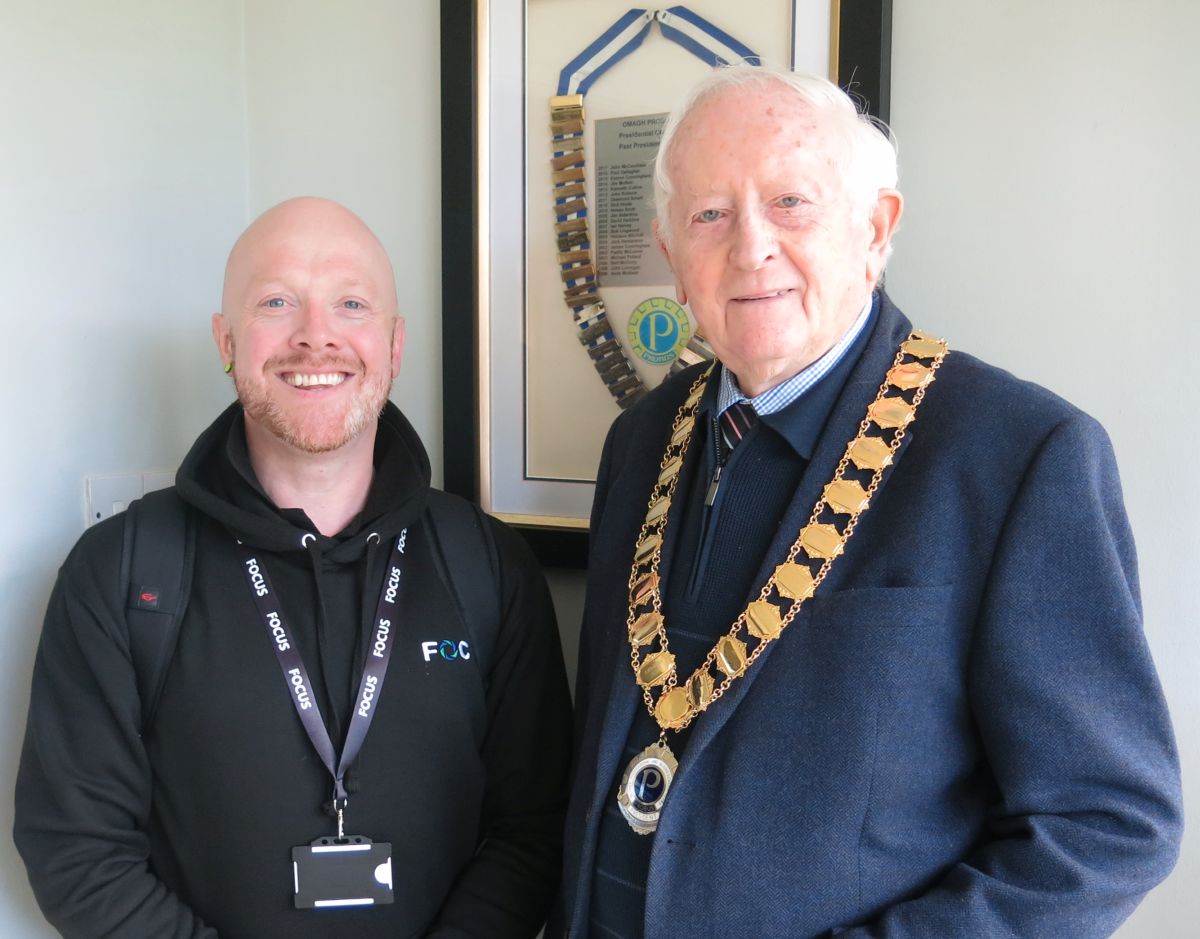
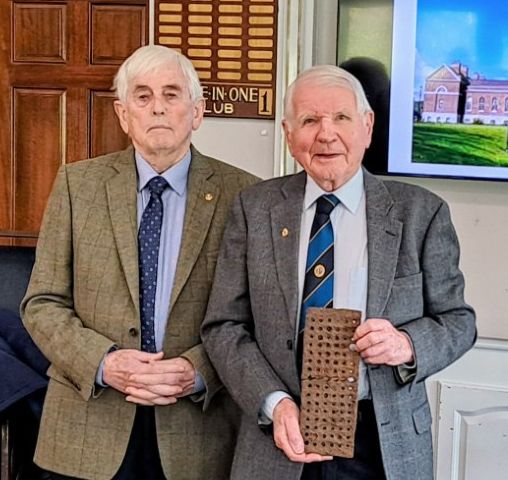
The guest speaker on Wednesday 7th October was Mr Ryan Tracey from FOCUS – an acronym for FORUM in OMAGH for COMMUNITY UNDERSTANDING and SUPPORT.
Ryan illustrated his talk with a PowerPoint presentation covering what FOCUS has to offer, the programme it delivers, why groups such as Probus should get involved and how to get in touch with the team based in the Community House. FOCUS is able to provide practical help such as free photocopying and printing as well as rooms in which to meet equipped with projectors, PA systems, laptops and microphones. He also outlined the various funding schemes that sustain the organisation
Ryan’s talk was followed by a lively question and answer session ending at 12 noon.
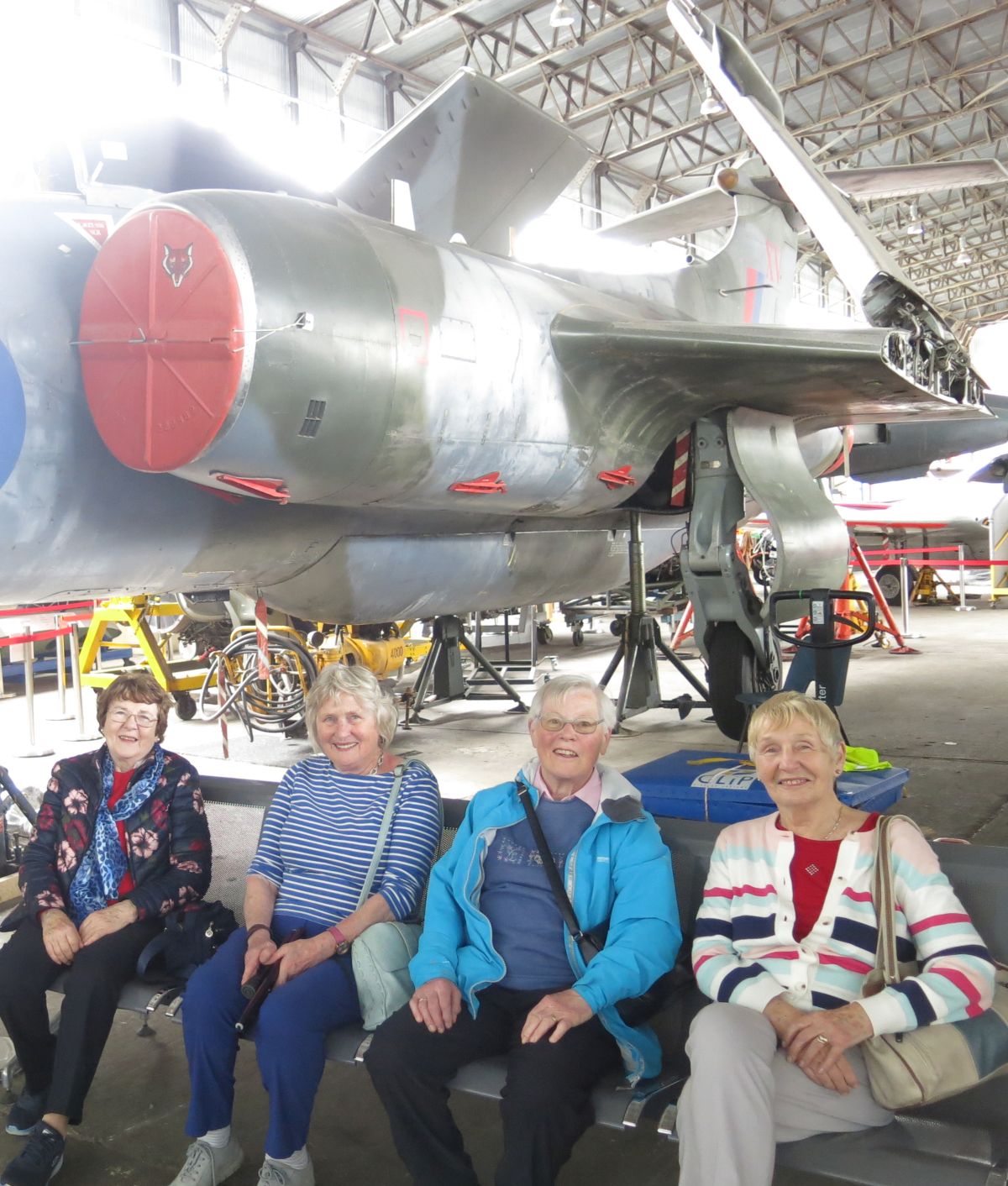
“Four Buccaneers” Ladies resting below the wing of a Buccaneer strike aircraft
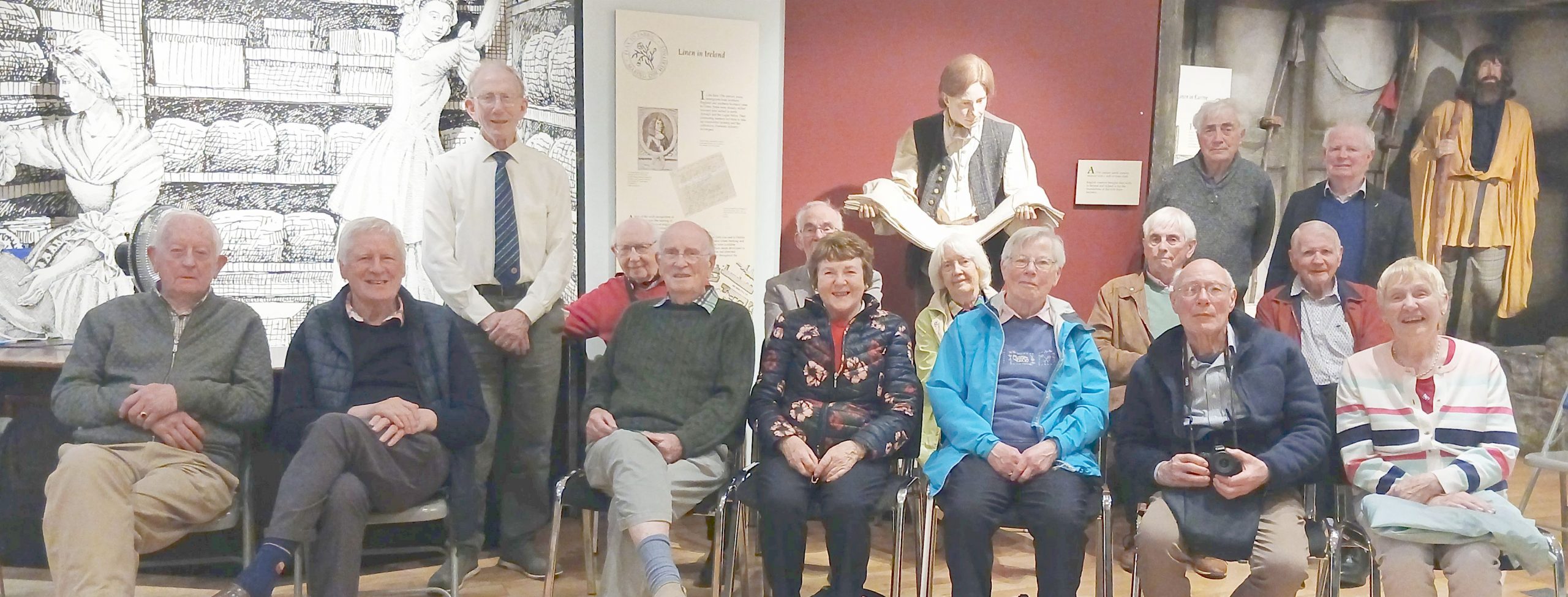
On Tuesday 16th June Omagh Men’s probus club embarked on their annual outing. In the morning members visited the Ulster Aviation Society Museum at the Maze and in the afternoon enjoyed a guided tour of the linen museum in the centre of Lisburn. Four ladies from the Ladies Probus Club took up the invitation to join with the men and all had a lovely day out.
The aircraft museum is housed in a World War II hangar dating from the time when there was an RAF base at Longkesh. It now has over 70 exhibits, the most recent acquisition being a Harrier jump jet which sits impressively alongside other classic frontline aircraft including a Canberra jet bomber, a Buccaneer, a Jaguar, a Tornado and a Phantom IV. Steps make it possible to climb into the cockpit of a “Red Arrow” a jet that was once part of the famous RAF display team. Helicopters, commercial aircraft and early flying machines add immeasurably to the display.
Following lunch in Hampton’s restaurant, Culcavey the party moved on to the Linen Museum for a talk about the history of flax growing and linen weaving. A prized artefact in the museum is a piece of linen from the tomb Tutankhamun 1323 BC. A reproduction fresco from the period shows that the methods used to cultivate flax and weave linen in ancient Egypt were not very much different to the methods used in 19th century Ireland. Demonstrations of spinning and handloom weaving made for a memorable day.
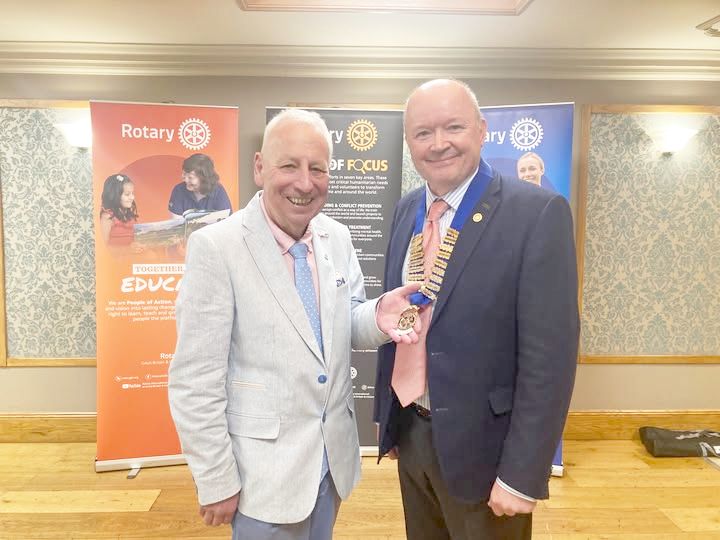
Mr Ronnie Oldcroft [R] receiving the Rotary Chain of Office from outgoing President, Peter WatersonThe speaker on Wednesday 27th May was Mr Ronnie Oldcroft, President of Omagh Rotary Club, in attendance to maintain the link between Probus and Rotary. He began by sharing that Rotary, like Probus, could do with some new members; however it has currently 40 on its books which makes it numerically one of the strongest in Ireland. It has long established links with Rotary in Dundalk and Antrim in a tripartite relationship valued by all three clubs.
The Rotary calendar begins in June each year with the election of a new President and kicks off in July with a stand at Omagh show. In 2026 they hope to be in a marquee with improved opportunities to display activities focused on money raised for charity. This includes money for the Rotary Foundation, worldwide in its reach, and the Northern Ireland Air Ambulance as well as donations to further research into childhood cancer, polio and MMD [Motor Neurone Disease].
Fund raising events include the Annual Charter Dinner, Golf Competition and “Tree of Remembrance” at Christmas in ASDA. Omagh Rotary is particularly proud of the encouragement it provides to young persons in the community by sponsoring events in local schools and colleges. Mr Oldcroft was warmly thanked for his visit by Probian and Rotarian, Oliver Loughran.
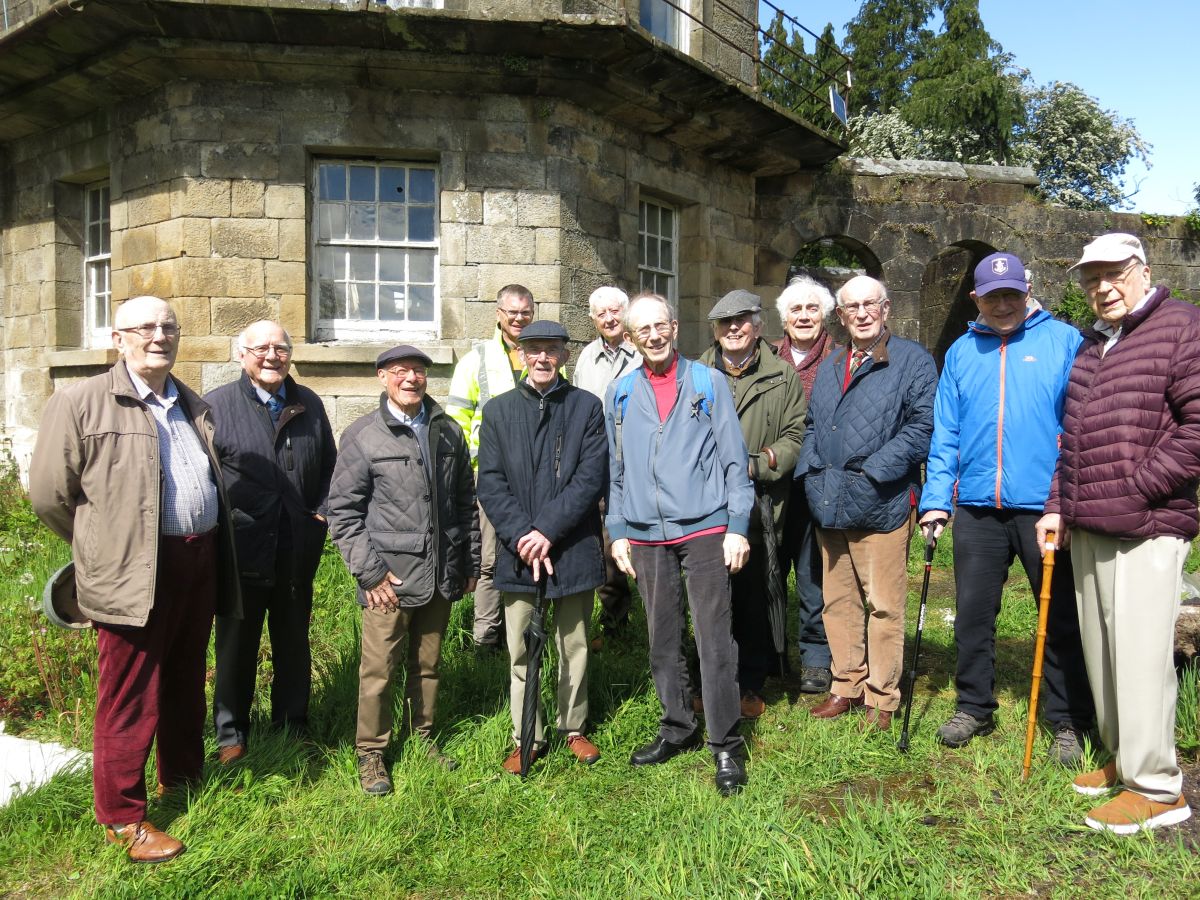
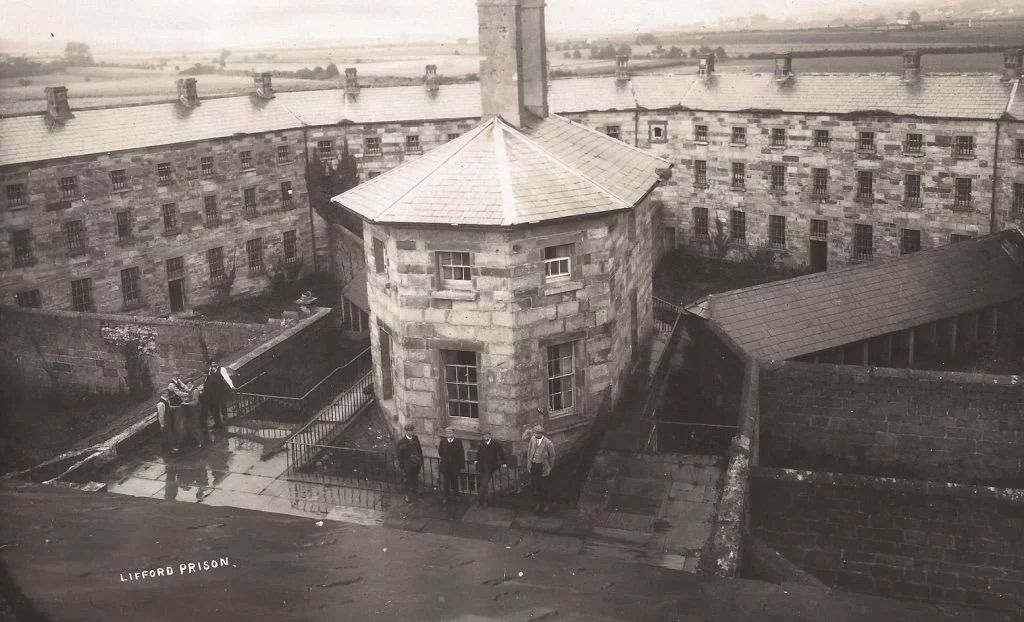
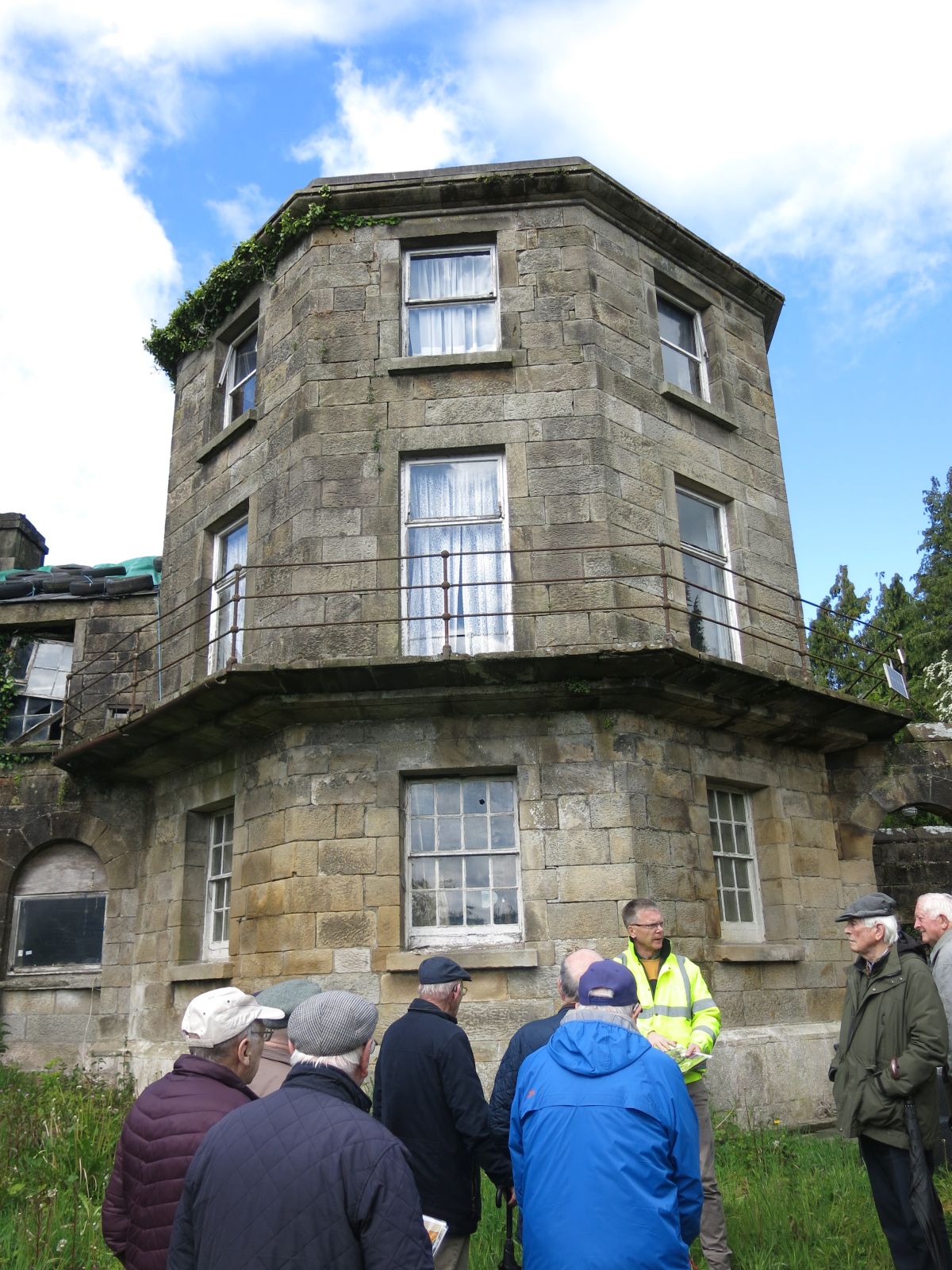
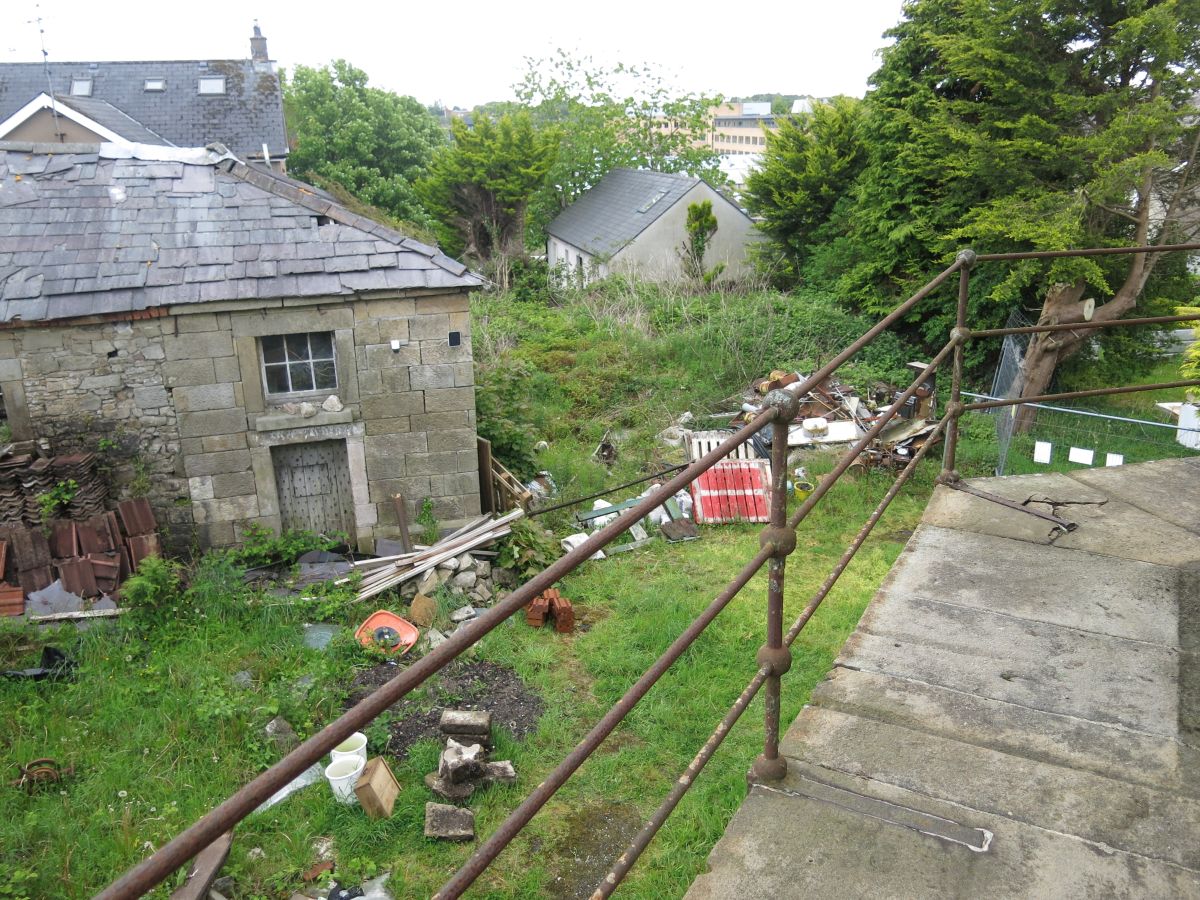
On Wednesday 20th May the club was treated to a conducted tour of the Governor’s House, Omagh Gaol, by Mr Rodney Hamill. This former residence sits in the middle of what was the gaol and was built in 1831 on the same plan as Lifford Gaol. The only visible difference is that the Governor’s House in Omagh has a first-floor balcony which runs right around the hexagonal building. This design afforded the governor a clear view of all the cell blocks and other buildings. Apart from the residence little remains of the old gaol apart from the archway that led into the site and the punishment block which housed a tread wheel; this device operated a pump which drew water from the river to serve the prison.
Governor’s House Lifford Gaol. Same design as Omagh
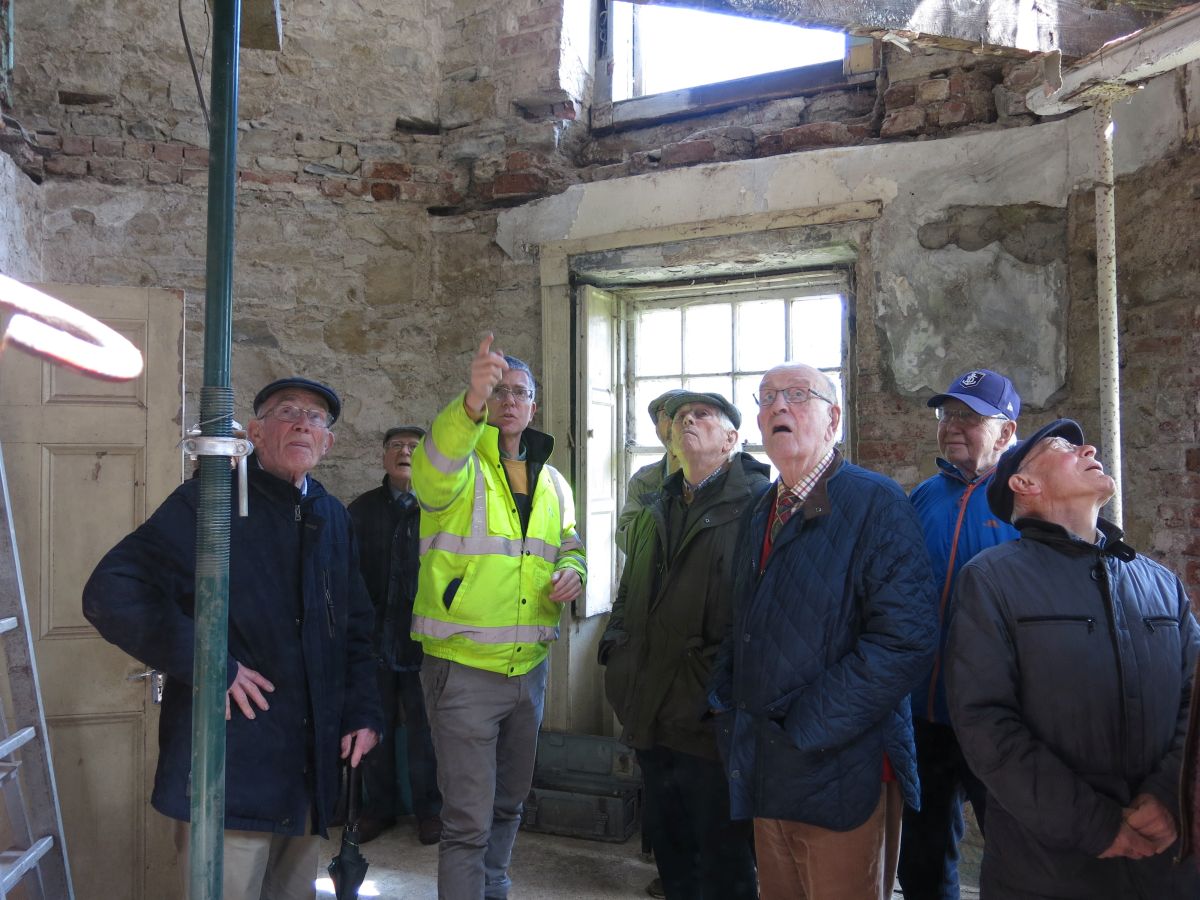
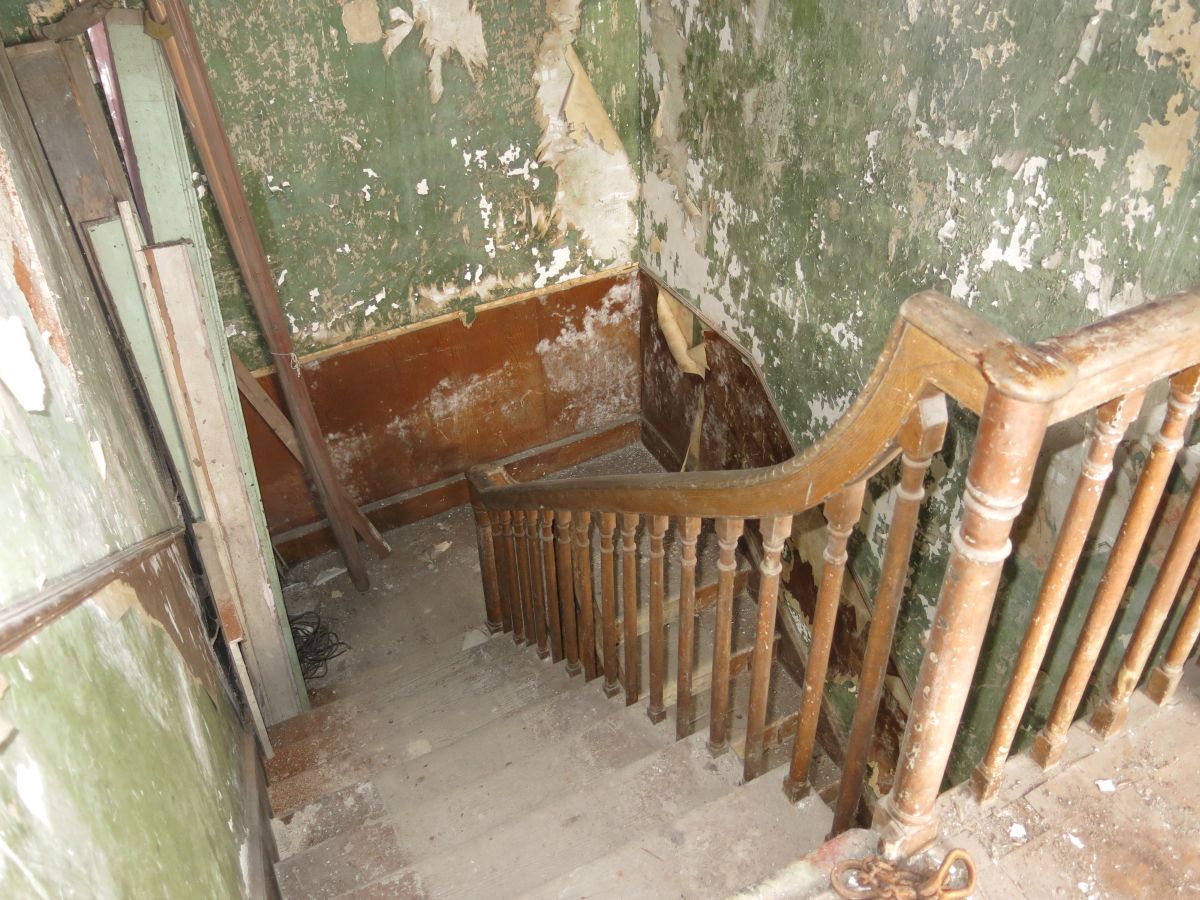
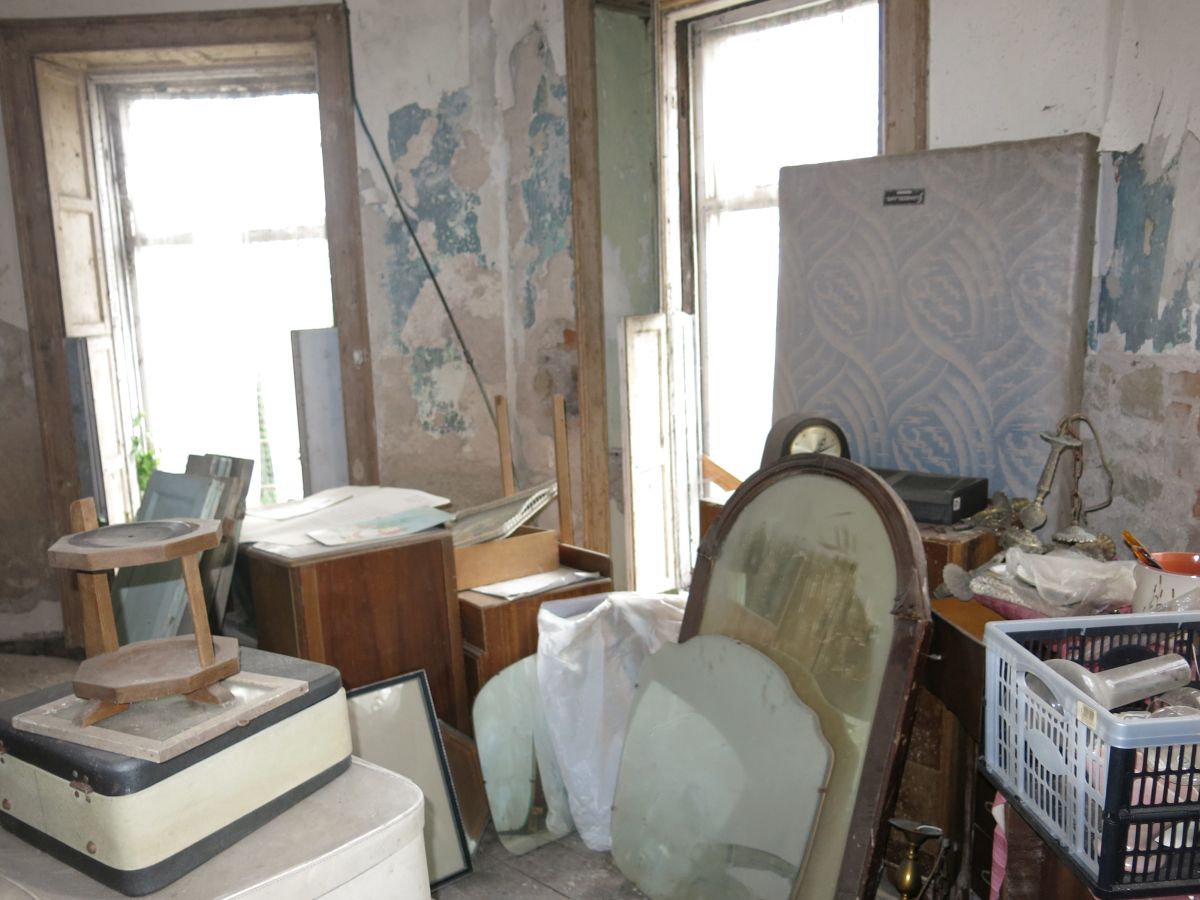
When Mr Hamill acquired the building, it had been unoccupied for several years and was close to being derelict. The previous owner had filled its rooms and surrounds with junk and debris all of which needed to be cleared away before restoration could begin. At some point water got into the building and did considerable damage to the joints supporting the first floor. This apart, the four floors of the building are accessible with care, and the central staircase remains strong and stable.
The building is full of reminders that the house was used for many years after the gaol closed as a private residence. It was occupied within living memory, and some club members could recall families who had their home in it – one being a local GP. At some stage it was wired for electricity and plumbed to provide running water and a bathroom with flush toilet.
Rodney looks at its restoration to a habitable building as a project that will occupy him for years to come. It would be nice if Fermanagh and Omagh District Council was to come alongside him in his efforts to save a historic building an iconic feature of the town.
Probus Wednesday 13th May 2026. Speaker, Mr Sean Harpur
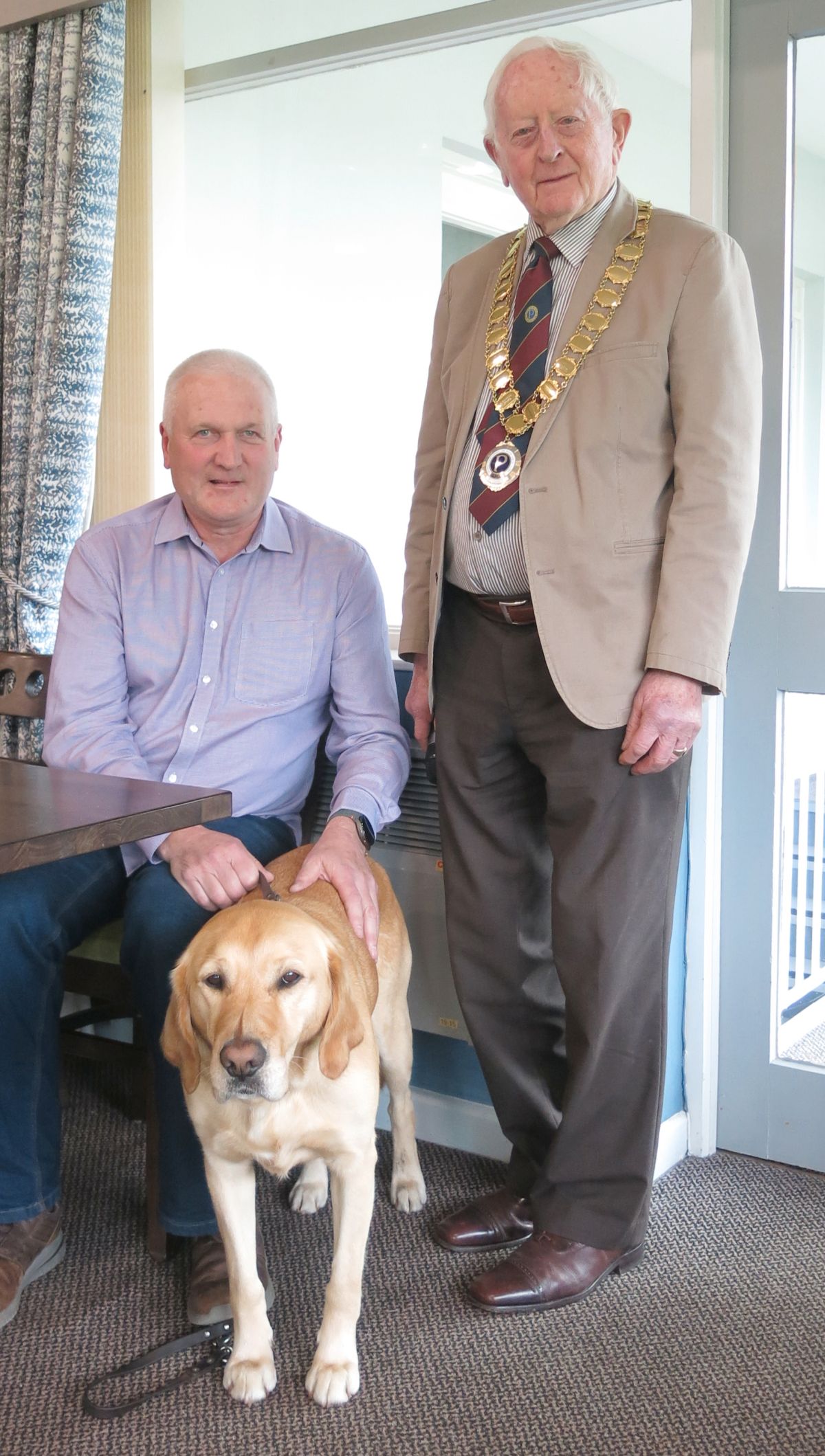
Sean with Benny and Club President, Aidan Quinn
The speaker on Wednesday 13th May was Mr Sean Harpur accompanied by his guide dog, Benny. Sean has Retinitis Pigmentosa, a form of blindness which is hereditary. His Grandfather, who lived in Drumquin, was known as the “Blind Thatcher,” because he was able to work on at his trade after losing his sight. Sean himself worked as an electrician alongside his father until progressive blindness forced both to quit. Since then, Sean has worked as a disc jockey and a visitor guide in Gorton Glen Forest Park.
Misfortune struck again when his sister Anne suffered kidney failure and desperately needed a transplant. When it transpired that Sean’s kidneys were a perfect match, he did not hesitate to donate one of his healthy kidneys to his sister. Since then, he has dedicated time and energy to fund raising for transplant surgery, organising sponsored walks, cycling from Malin to Mizen in 2002 and from Mizen to Malin in 2003.
Sean’s association with Gordon Glen Forest Park owes much to the fact that his grandmother lived in a cottage within the confines of the park and as a child he was a frequent visitor. In 2019 the park received funding from FODC to the tune of £1,000,000 an investment which has transformed the Glens into the council’s most visited tourist attraction.
In a lively question and answer session Sean talked about how the park was used in 1943 by American troops to prepare for the D-Day landings. A large cold-water tank was constructed for GI’s to wade across to simulate landing on the beaches of France. This and other gems of history served to enliven a very memorable morning.
The speaker on Wednesday 6th May 2026 was club member Hugh Ward, drafted in at the last minute to substitute for another, who had been taken ill. Hugh adopted as his theme “Storytelling” which he claimed was apt because the surname WARD derives from Irish Gaelic and means “Son of the Bard.” To develop his talent, he joined a summer school in Arnold’s Hotel, Dunfanaghy, run by the celebrated writer and journalist, Alf McCreary. During this time, he was encouraged to write about his childhood in rural Tyrone during the 40s and 50s and had published a short story entitled “Crickets sing no more.”
The title was inspired by crickets which were commonly found in the open hearths of thatched cottages. The crickets are gone as are most of the things Hugh recalled from his childhood in the townland of Brackey – GI’s in Drumnakilly, blackout curtains on isolated farmhouses, B-specials, Lord Haw-Haw on the radio, a foot stick over the Camowen river.
Hugh’s reading of his story was well received and sparked many memories of the period among those born during the early days of World War II
Business Meeting 29.04.26
The meeting on Wednesday 29th April was devoted to Club Business, with the focus on arrangements for the rest of the summer session.
1. Visit to The Governor’s House on 20th May. Because parking at the site is limited and restricted it was agreed to assemble at the Golf Club at 10.30am and share cars.
2. Memory Morning 27th May 2026. The following members offered to give a
10 – 12-minute slide show of some event which had a special place in their memory.
• Jim McBride – Cycling in the Andes
• Jim McBain – Trekking to Base Camp Everest
• Frank Collins – Cruising on the Danube
• Aidan Quinn – cows and milking parlours
2. Club Outing, Tuesday 16th June to the Ulster Aviation Society Museum in the morning at the Maze and Irish Linen Museum, Lisburn in the afternoon. Jim McBain tabled a draft programme for the day, which was discussed and agreement reached that members would car share and stop at Quinn’s for an evening meal on the way home. Jim McBain and Jim Graham agreed to recce the outing and work out an overall cost.
3. Looking ahead to the Chairman invited suggestions for speakers and topics for the Autumn session. Some 15 ideas were put forward for consideration.
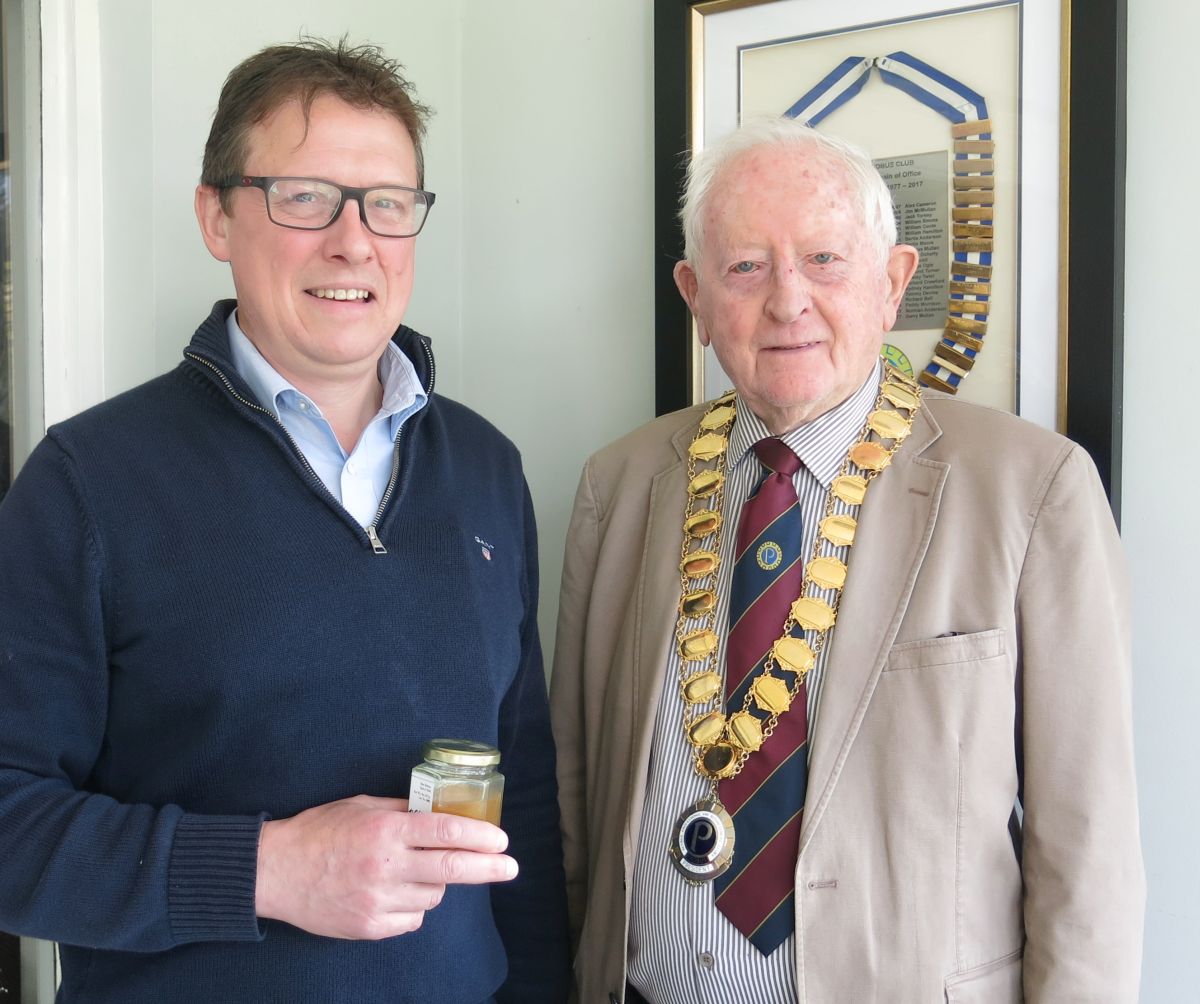
Dr Motherwell holding a jar of honey with Aidan Quinn, Club President
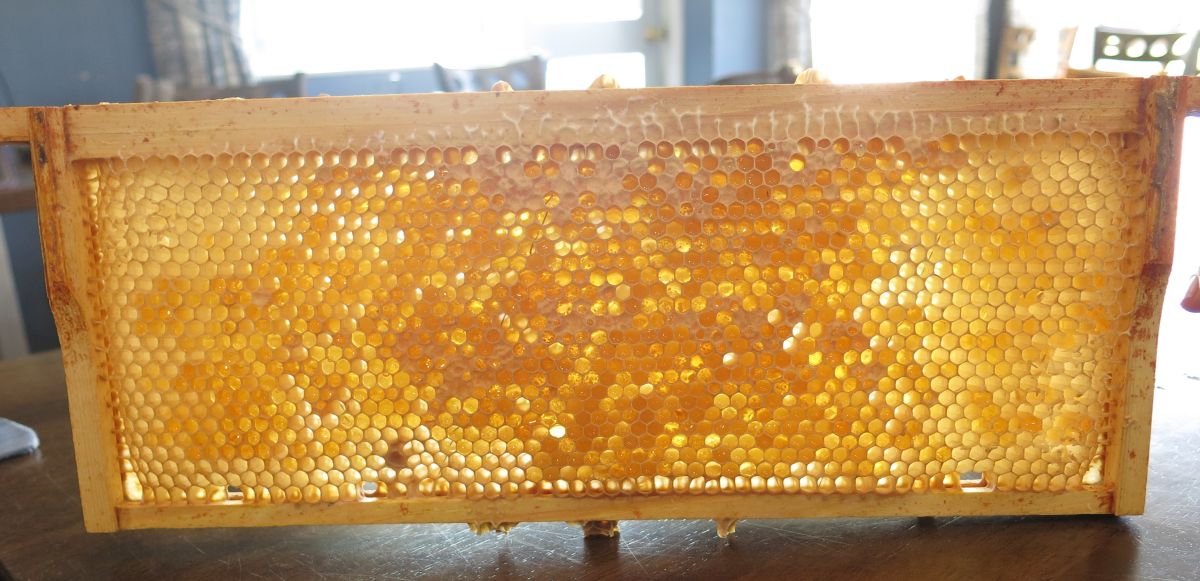
The speaker on Wednesday 22nd April 2026 was Dr Duncan Motherwell, a local GP with an interest in beekeeping. Having started with one hive some six years ago he now has twenty. Dr Motherwell brought with him a jar of his homegrown honey and a box of tongue depressants ( Say AHHH) with which to taste his produce. All agreed it was excellent.
To get started on his hobby Dr Motherwell took a 10-week beekeepers’ course with the Fermanagh Beekeepers Association but admits he still has a lot to learn. For the uninitiated he explained that there are three types of bee in each hive – a Queen which lays two thousand eggs per day – worker bees which collect nectar from flowers and make honey, and drones whose sole purpose is to mate with the Queen.
From April onwards when hives becomes active again after winter, beekeepers open them to inspect progress. A comb will fill with honey in a week when wildflowers are in bloom. A big event in beekeeping is the annual swarm when the Queen leaves the hive and other bees follow. Often the swarm will settle in a nearby tree or bush where it can be captured and placed in a new hive. Back in the old hive a juvenile Queen matures and spawns the next generation.
Doctor Motherwell explained that nectar is 80% water and honey 20%, the excess moisture being evaporated by the air currents created by worker bees flapping their wings. Honey is a healthy natural food and good for your health but with fewer medicinal properties than folklore suggests.
Doctor Motherwell was thanked for his talk by club member Alistair Orr
The speaker on Wednesday 16th April 2026 was club member, Jim McBride, talking about AI (Artificial Intelligence). Jim’s background in computing meant he was able to address the topic with insight and understanding. He began with a brief history of innovation showing that AI was born during World War II when Alan Turing helped break the German enigma code at Bletchley Park, proving that machines could perform complex reasoning tasks.
After the Second World War when Europe and Japan were rebuilding America forged ahead attracting the best scientists from around the world. The leading companies in the early days where AT&T and Bell Labs, which pioneered programming and developed transistors. Big names followed including Intel, IBM, Nvidia, Apple and Microsoft. which clustered in a part of California that became known as Silicon Valley.
The breakthrough to modern AI came as recently as 2017 when Google researchers introduced the transformer and new architecture that could understand language far better than anything before. This single idea led directly to a bunch of AI providers including ChatGTP, Gemini, Claude, and Co-pilot. These systems are so capable that they are being used to build the next generation of AI machines.
Jim demonstrated the power of AI by playing a poem about Omagh written by AI and set to music composed by AI. All were impressed. There followed a lively question and answer session which ran well past the hour at which the club normally closes.
Kenneth Collins [R] with Oliver LoughranThe speaker on Wed 8th April 2026 was club member Kenneth Collins and the topic was Omagh Workhouse. This well illustrated address was the result of detailed research enhanced by the fact that Kenneth had actually worked in the same building during one of its later iterations.
In the Ireland of 1800 with a population of eight million it is estimated that two million were living in varying degrees of destitution. In 1838 the Irish Poor Relief Act was passed and across the country Commissioners set up 163 Poor Law Unions each with a workhouse.
Each had a Board of Guardians (29 members – mainly from the landed gentry plus 9 ex-officio members). The Omagh Union was larger than most taking in an area of 272 square miles. A suitable six acre site was identified between Woodside Terrace and St Julian’s Road and George Wilkinson (an Oxford architect) was selected to draw up plans. The Board of Guardians borrowed funds from the Exchequer Loan Office on the basis of a long term loan. The contract for £6557 was agreed in 1839 and building opened in 1841.
The standard design was on the basis of full segregation of the 800 inmates – men, women, boys and girls. The complex included an admissions block, exercise yards, dormitory blocks, a kitchen, dining hall, school room, infirmary, laundry, a building called the idiots’ block and a mortuary (or dead house). Kenneth included the only surviving photograph of the Omagh building – an excellent shot of the Admissions Block.
The Omagh Union had a working farm and an agriculturist so the daily activities were farming and breaking stones for men and laundry and food preparation for women. Daily routine consisted of a 6am bell, 6.30 roll call, prayers, grace and breakfast. 7.30 work. 12noon to 2pm dinner, 2pm back to work.
The regime was harsh and boys were caned for misbehaviour. However there is some evidence that Omagh may have been a more progressive institution. In 1880 the Master took 40 children on an excursion to Bundoran.
There are very few remaining records so Kenneth searched back copies of the Constitution for reports relating to the workhouse. During the famine occupancy rose to 1177 inmates and fever spread rapidly. In 1848 George Wilkinson was brought back to design a Fever Hospital.
Many workhouses were converted into hospitals (for example Limavady) but in 1922 a meeting of the Board of Guardians decided not to follow this route as the Tyrone County Hospital fulfilled that role.
In 1948 the NHS arrived and the workhouse finally closed its doors after 107 years. The building then became Omagh General Hospital and a maternity wing was added.
In 1954 when Omagh Rural District Council occupied part of the building Kenneth was employed as a Building Surveyor and he was based in an office there.
In 2006 the Workhouse/General Hospital was demolished and it is a matter of considerable regret that today there is no evidence on site that this iconic building ever existed.