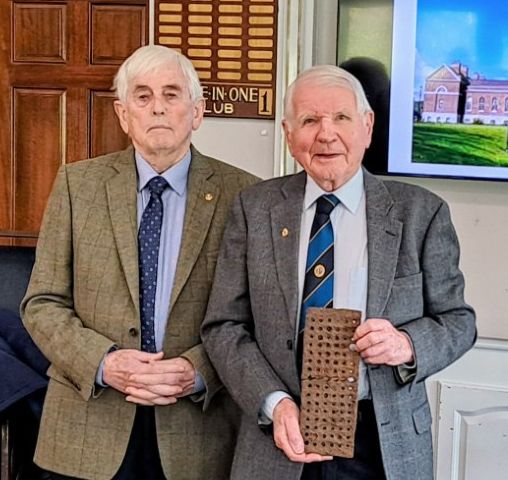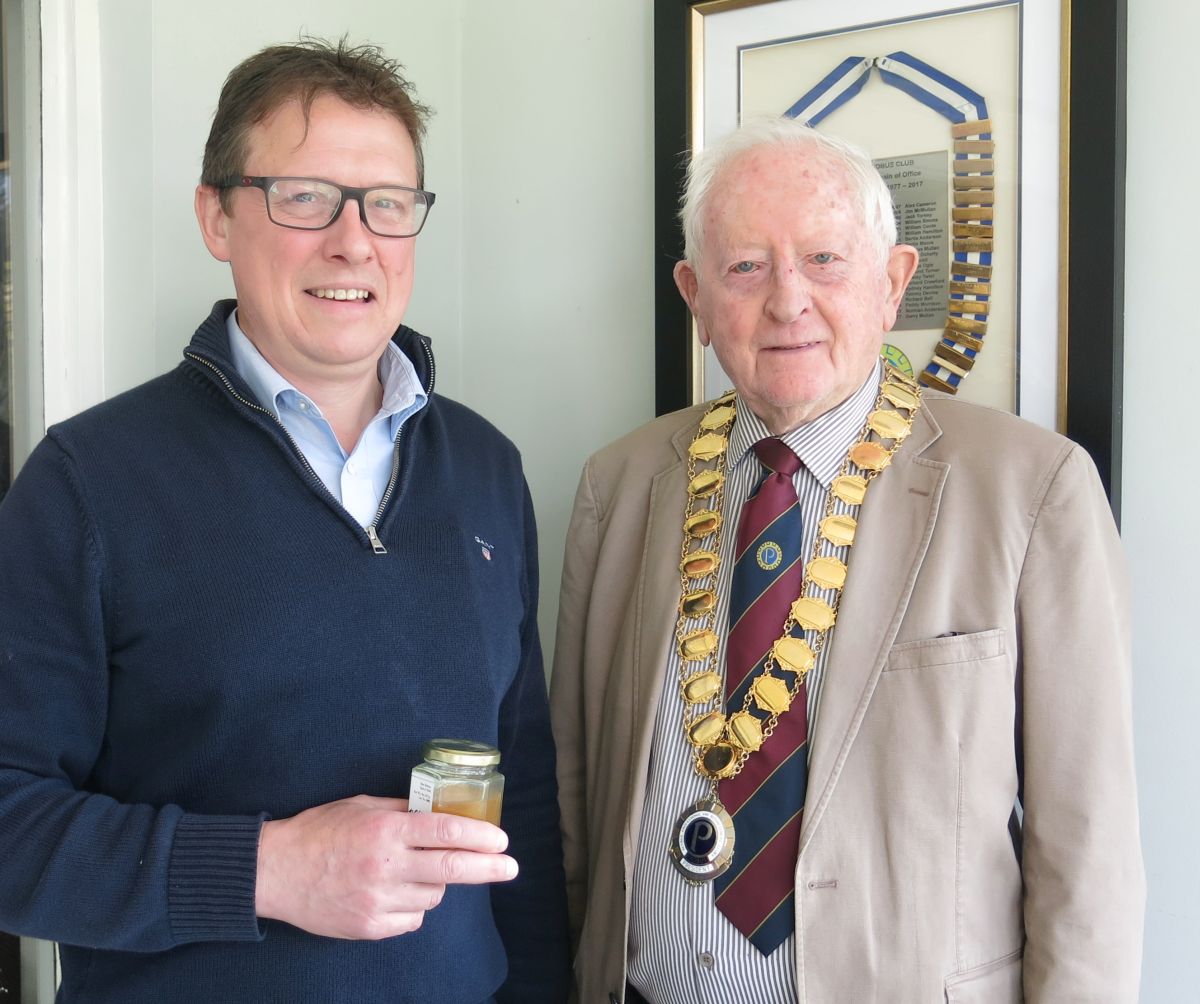
The speaker on Wednesday 22nd April 2026 was Dr Duncan Motherwell, a local GP with an interest in beekeeping. Having started with one hive some six years ago he now has twenty. Dr Motherwell brought with him a jar of his homegrown honey and a box of tongue depressants ( Say AHHH) with which to taste his produce. All agreed it was excellent.
To get started on his hobby Dr Motherwell took a 10-week beekeepers’ course with the Fermanagh Beekeepers Association but admits he still has a lot to learn. For the uninitiated he explained that there are three types of bee in each hive – a Queen which lays two thousand eggs per day – worker bees which collect nectar from flowers and make honey, and drones whose sole purpose is to mate with the Queen.
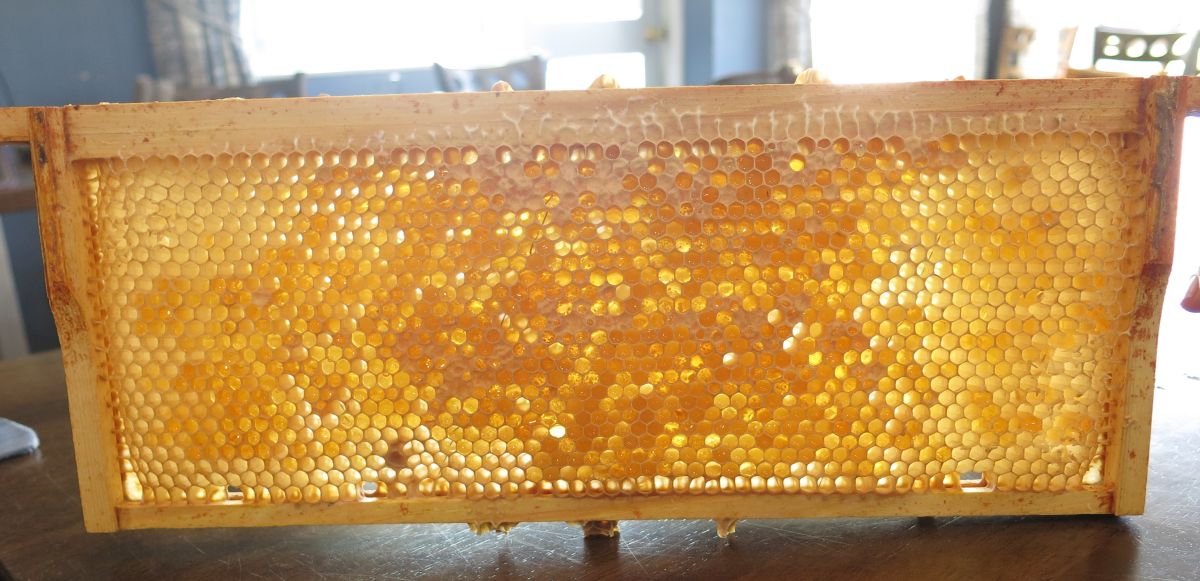
From April onwards when hives becomes active again after winter, beekeepers open them to inspect progress. A comb will fill with honey in a week when wildflowers are in bloom. A big event in beekeeping is the annual swarm when the Queen leaves the hive and other bees follow. Often the swarm will settle in a nearby tree or bush where it can be captured and placed in a new hive. Back in the old hive a juvenile Queen matures and spawns the next generation.
Doctor Motherwell explained that nectar is 80% water and honey 20%, the excess moisture being evaporated by the air currents created by worker bees flapping their wings. Honey is a healthy natural food and good for your health but with fewer medicinal properties than folklore suggests.
Doctor Motherwell was thanked for his talk by club member Alistair Orr